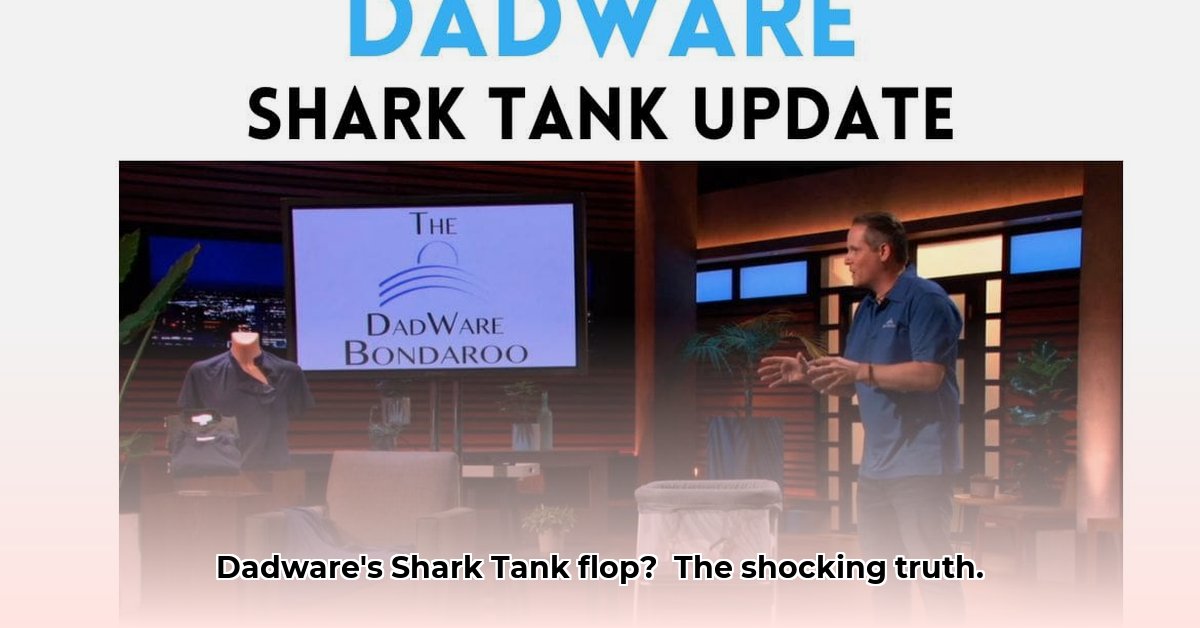
Dadware, the company behind the Bondaroo baby-wearing shirt, experienced a meteoric rise following its appearance on Shark Tank, only to ultimately fail. This case study analyzes Dadware's post-Shark Tank performance, exploring the factors contributing to its demise and extracting actionable lessons for entrepreneurs and investors. The analysis reveals how even significant initial success can be short-lived without a robust and sustainable business model. For more on Shark Tank success stories and failures, check out this useful resource.
Shark Tank Performance & Initial Success
Dadware's Shark Tank appearance generated considerable buzz, leading to a substantial sales surge. Initial sales estimates ranged from $1 million to $1.2 million, representing a significant initial success. This rapid growth, however, proved unsustainable, highlighting the crucial differences between short-term gains and long-term viability. The initial success masked underlying vulnerabilities that ultimately led to the company's failure.
Factors Contributing to Failure
Niche Market Limitations
Dadware's Bondaroo, while innovative, catered to a highly specific niche: fathers seeking increased skin-to-skin contact with newborns. This inherently limited their potential market size. While the product appealed to a segment of the population, the overall market was too small to support long-term growth, even with the Shark Tank boost. A broader market strategy or product diversification could have mitigated this risk. Did Dadware underestimate the limitations of their niche? This remains a key question in understanding their failure.
Operational Inefficiencies
Dadware faced significant challenges in managing its operations. Production costs were high (approximately $9.04 per unit), resulting in slim profit margins even at the $39.99 retail price. Furthermore, the company struggled with inventory management, leading to both stockouts and excess inventory, further straining financial resources. These inefficiencies compounded the impact of the limited market size. Could improved operations have altered the outcome? A more effective inventory management strategy and cost-reduction measures might have significantly improved profitability.
Financial Challenges
Dadware's early success masked a precarious financial situation. The founder's reliance on personal credit cards for financing created a high-risk, unsustainable financial foundation. The initial Shark Tank sales surge, though substantial, was not sufficient to build a stable financial base. The company lacked diversified funding and a robust long-term financial strategy. What is the lesson here? Proactive financial planning and secure funding are vital for long-term sustainability, regardless of initial success.
Lessons Learned
The Dadware case study provides several critical lessons for various stakeholders:
Actionable Intelligence for Entrepreneurs
- Conduct Thorough Market Research: Accurately assess the size and potential of your target market before launching a product. Avoid relying solely on initial enthusiasm or perceived demand.
- Develop a Robust Business Plan: Create a comprehensive business plan that includes detailed financial projections and realistic sales forecasts. Account for potential risks and challenges.
- Optimize Operations and Cost Management: Streamline your operations and implement effective cost-reduction measures to achieve higher profitability margins. Implement robust inventory management systems.
- Diversify Revenue Streams: Avoid relying on a single product or funding source. Develop multiple revenue streams and explore diverse funding opportunities.
Actionable Intelligence for Investors
- Conduct Due Diligence: Thoroughly assess a company's market potential, financial stability, and operational efficiency before investing. Analyze the scalability of the business model.
- Evaluate Long-Term Viability: Prioritize investments in companies with sustainable business models and strong long-term growth potential, not just initial success.
- Assess Management's Capabilities: Evaluate the management team's experience, expertise, and ability to manage growth effectively.
Actionable Intelligence for Aspiring Shark Tank Contestants
- Prepare for Post-Show Challenges: Recognize that Shark Tank exposure, while beneficial, doesn't guarantee long-term success. Develop a strong contingency plan for managing post-show growth and potential challenges.
- Focus on Scalability and Sustainability: Develop a product and business model that can support long-term growth, not just short-term gains.
- Develop a Clear Exit Strategy: Have a clear idea of how you will transition the business to sustainable growth even after the initial boost.
Conclusion
Dadware's trajectory serves as a compelling cautionary tale. The company's initial success, fueled by a Shark Tank appearance, masked inherent weaknesses in its market strategy, operations, and financial planning. The case study underscores the importance of comprehensive market research, efficient operations, robust financial planning, and a sustainable business model for long-term success. Ignoring these factors can lead to failure even after achieving seemingly significant early success. The experience of Dadware offers valuable lessons for entrepreneurs, investors, and anyone seeking sustainable growth in the competitive business world.